For technicians, hobbyists, and DIY users, Fluke’s entry-level compact digital multimeters offer reliability at an affordable price. The Fluke 101 and Fluke 106 are two of the most popular models in this category.

🏷️ Fluke Multimeter Deals ⭐⭐⭐⭐
While they look similar, they serve slightly different purposes. Let’s break down the key differences so you can pick the right one.
📋 Overview of the Fluke 101
The Fluke 101 is designed as a basic, ultra-portable digital multimeter for quick measurements. It’s affordable, lightweight, and durable, making it a great option for beginners or those who need a secondary meter for simple checks.

Key Features:
- Compact and lightweight (only ~160g).
- Measures AC/DC voltage, resistance, continuity, and frequency.
- CAT III 600V safety rating.
- 2000-count display.
- No current (A or mA) measurement.
Best For: Beginners, homeowners, or professionals needing a quick, pocket-sized tester for basic measurements.
⚡ Overview of the Fluke 106
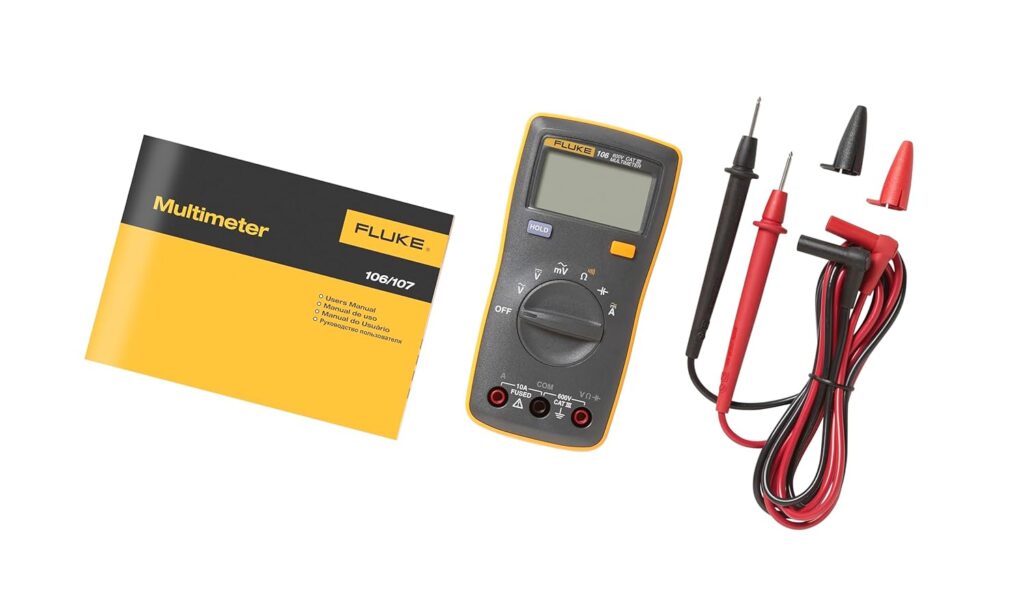
The Fluke 106 is a step up, offering more measurement functions while keeping the same compact form factor.
Key Features:
- Measures AC/DC voltage, resistance, continuity, and frequency.
- Can also measure current (up to 10A) and capacitance.
- True-RMS for more accurate AC readings.
- CAT III 600V safety rating.
- Compact size, slightly heavier than the 101.
Best For: Professionals or hobbyists who need a compact multimeter but still require current and capacitance measurement.
⚖️ Fluke 101 vs 106: Side-by-Side
| Feature | Fluke 101 | Fluke 106 |
|---|---|---|
| Size & Weight | Very light, pocket-sized | Compact, slightly heavier |
| Voltage Measurement | ✅ Yes | ✅ Yes |
| Resistance/Continuity | ✅ Yes | ✅ Yes |
| Frequency | ✅ Yes | ✅ Yes |
| Current Measurement | ❌ No | ✅ Up to 10A |
| Capacitance | ❌ No | ✅ Yes |
| True-RMS | ❌ No | ✅ Yes |
| Safety Rating | CAT III 600V | CAT III 600V |
| 💳 Pricing | 💲Check Price | 💲Check Price |
✅ Pros and Cons
Fluke 101
✔ Affordable entry-level option
✔ Extremely lightweight and portable
✔ Reliable for voltage, resistance, and continuity
✘ No current measurement
✘ Lacks True-RMS
Fluke 106
✔ Includes current and capacitance measurement
✔ True-RMS accuracy
✔ Still compact and easy to carry
✘ More expensive than the 101
✘ Fewer features compared to larger Fluke meters

📝 Which One Should You Choose?
- Choose the Fluke 101 if you want a budget-friendly, ultra-portable meter for basic tasks like voltage checks, resistance, and continuity testing.
- Choose the Fluke 106 if you need a compact but more capable meter with current and capacitance measurements and True-RMS accuracy.
In short, the Fluke 101 is the minimalist’s choice, while the Fluke 106 is the more versatile compact multimeter for everyday professional use.
